

-

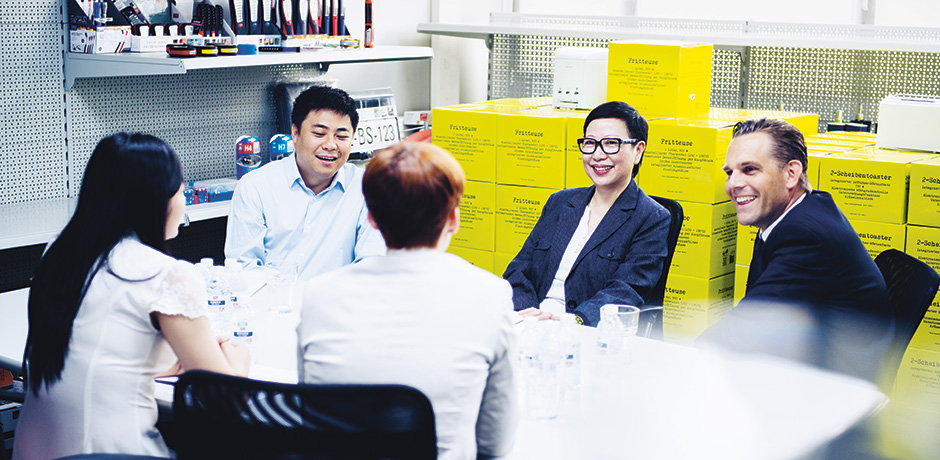
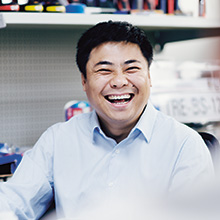
Ongoing dialogue: Margaret Chan is a regular visitor to suppliers’ operations in order to interact with her business partners.
-

-

-




Interview
“We want to communicate that sustainability
is key for long-term viability.”
As import organisation for METRO GROUP, MGB METRO GROUP Buying Hong Kong is responsible for the international purchasing of non-food products for all sales lines. The company cooperates with more than 900 suppliers and producers. In order to ensure the highest levels of quality and safety in the procurement process and to make the supply chain transparent for consumers, MGB sets high standards with its CR strategy. Close communication with producers regarding challenges and opportunities for improvement is essential here. In an interview, Margaret Chan, Executive Manager of Corporate Social Responsibility at MGB Hong Kong, and Michael Ciesielski, Managing Director of MGB Hong Kong, spoke with two business partners: Vicky Wang is the manager of outdoor-furniture manufacturer Yotrio. Robin Qin is the manager of Pipigou in Shanghai, a producer of cashmere clothing.
Interview Partner

MARGARET CHAN
Executive Manager of Corporate Social Responsibility at MGB Hong Kong
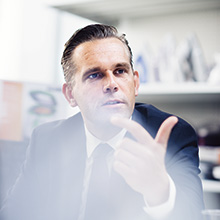
MICHAEL CIESIELSKI
Managing Director, MGB Hong Kong
ROBIN QIN
Manager of Pipigou in Shanghai

VICKY WANG
Manager of outdoor-furniture manufacturer Yotrio
Mr Ciesielski, the implementation of social standards, especially in Asian suppliers’ premises, has been gaining increasing public attention. What is the philosophy behind your CR strategy at MGB Hong Kong?
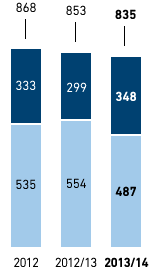
MICHAEL CIESIELSKI The objective of MGB Hong Kong is to have 100 per cent of the goods sourced from factories that are socially compliant. This strategy certainly benefits society but also clearly responds to our customers’ expectations of decent and fair factory conditions in relation to the products they buy. Therefore, having a strong and well-implemented CR strategy is our social obligation. CR is an effective sales tool; we can win customers with our strict social standards for the supply chain. MGB Hong Kong currently works with about 1,700 factories and we know all of them. In this way, we ensure that a high level of transparency is present in our supply chain.
Yet in practice, it is a true challenge to ensure all suppliers and factories adhere to the required social standards. So how does MGB Hong Kong customise its approaches and measures to effectively address the local risks as well as common concerns?
MICHAEL CIESIELSKI It is indeed a challenge. In practice, we carry out a mix of measures. For us, as a member of the Business Social Compliance Initiative (BSCI), a global initiative to promote good working conditions among suppliers, the first step is always to have our suppliers’ production facilities audited. Based on three possible outcomes – non-compliant, improvement needed or good – we take decisions. Severe violations concerning safety issues, child labour, fire prevention or discrimination will result in the immediate termination of cooperation with the supplier. In the case of minor faults which can be corrected, we instruct and help suppliers to address the problem accordingly to fit our standards within a defined time window. The objective is to make suppliers understand that sustainability is a key topic for their long-term viability. This is apparent when we do major business with them.
“MGB Hong Kong fully complies with BSCI and International Labour Organization (ILO) standards.”
Of course, we must always keep in mind that circumstances differ from country to country. In Bangladesh, for instance, the main challenge facing us is safety issues. The common high building structure and the lack of safety installations there make it prone to accidents. But overall in Asia, the most common concern is the practice of overtime. MGB Hong Kong fully complies with BSCI and International Labour Organization (ILO) standards, or with local regulations if they are stricter. Our CSR team takes the initiative to communicate with suppliers and discuss possible solutions such as shift changes and productivity improvements to address overtime.
MARGARET CHAN MGB has compiled a package of designed measures to optimise and strengthen social compliance in our supply chain. Our supplier factories are divided into two categories – new and existing. New factories must be examined thoroughly by MGB before being listed, while we audit the existing factories regularly to ensure their CR compliance. In the case of non-compliance, factories are given a maximum of 18 months to improve on the faults to fit our criteria, and are further monitored. We regularly arrange free-of-charge workshops for our active suppliers and business partners, especially in countries like Bangladesh, India and China. They focus on the top causes of non-compliance. Our CSR team invites them to take part in the focused courses to prepare for the required audit processes. It is crucial for them to apply the acquired knowledge in practice, to achieve appropriate improvements.
ROBIN QIN After we failed the BSCI review the first time, we analysed the failure ourselves. MGB staff provided the necessary guidance. They visited our factory and trained us in the correct practices on site. The improvement steps made my workers realise that their own safety and interests are protected by being compliant with the BSCI standards, and this serves as strong motivation for them to take the right steps in practice. Now they have self-protection awareness and more care for the factory.
However, non-compliance may still occur and when that happens, MGB Hong Kong implements more concrete measures to improve and enhance suppliers’ awareness of and compliance with the social standards.
MICHAEL CIESIELSKI Yes, we offer our support wherever we see opportunities. Actually, the suppliers don’t only improve compliance with social standards but also raise their productivity through our joint efforts. To reduce or even eliminate overtime work, for example, we help suppliers with our ILO SCORE project to optimise operational processes and workplace cooperation in order to increase efficiency, including better capacity planning, ordering or booking. This results in less stress for the supplier and more reliability – a win-win situation.
“Since MGB Hong Kong helped us pass the BSCI audit and standardise the factory processes, we have also attracted some other european clients.”
VICKY WANG I think we have benefited a lot from MGB, especially in the area of order management. Due to fluctuating demand, it is not always easy to adjust resources smoothly to meet the demands of different phases. Now we encourage our clients to place busy-season orders or long-term orders during our slack season to secure balanced production around the year. As a result, we maintain a stable workforce without big fluctuations between busy and slack seasons.
How do MGB Hong Kong employees who are involved in the daily assessment of the suppliers’ qualifications receive the necessary sustainability training and working tools to possess the right knowledge and expertise in this regard?
MARGARET CHAN We have regular internal training for our staff, especially our colleagues in the Purchasing and Quality Control departments. They also learn about the BSCI standard and equivalent social standards: occupational health and safety, building, fire and electrical safety, the new BSCI Code of Conduct, etc. Buyers are in direct and close contact with suppliers and factories so they can clearly specify our requirements. For the Quality Control department, this training can enhance their understanding and knowledge of the relevant standards, as they also support checks on fire safety in factories.
Mr Qin, how has your business developed since implementing the social standards? What role does sustainability play in your corporate vision?
ROBIN QIN Since MGB Hong Kong helped us pass the BSCI audit and standardise the factory processes, we have also attracted some other European clients, who were very impressed with our standardised operations when visiting our factory. Actually, it has helped us get more orders from clients. In the future, we will continue to invest in sustainability-related projects because we see sustainability as a key element of our corporate agenda and thus we are willing to make an effort in this area.